Skip to content


What Oil Is Best for Seasoning Cast Iron?
Knowing what oil to use to season cast iron is an important part of caring for your cookware and helping it perform better over time. The right oil, applied correctly and exposed to heat, helps build a protective seasoning layer that improves natural food release and helps protect the iron from moisture and rust.
In this guide, we'll explain which oils you can use to season cast iron, which one we recommend avoiding, and how to apply oil correctly.
Why Is Oil Used to Season Cast Iron?
Seasoning involves applying a very thin layer of oil to cast iron and then heating it. With heat, the oil polymerizes and bonds to the surface, forming a durable protective layer.
This seasoning helps:
- Protect the cast iron from rust.
- Develop a natural, nonstick cooking surface.
- Make cleaning easier.
- Keep your cookware in good condition for years.
- Improve its performance progressively with regular use.
Victoria cast iron cookware comes pre-seasoned at the factory and ready to cook with. You don't need to start the seasoning process from scratch. Instead, regular cooking and proper maintenance help strengthen and build on the seasoning already on your cookware.
The more you use your cast iron, the better its seasoning can become.
What Oil Should You Use to Season Cast Iron?
You don't need a complicated or hard-to-find oil to care for your cast iron. There are several options that can work well when applied correctly.
Flaxseed Oil
Flaxseed oil is the oil Victoria uses for its factory seasoning process.
When properly applied and heated, flaxseed oil polymerizes and forms a durable layer on the cast iron surface.
Victoria uses Kosher-certified, non-GMO flaxseed oil for its factory seasoning.
If you want to add seasoning at home, flaxseed oil is one of the options we recommend.
Canola Oil
Canola oil is a practical, accessible option for seasoning and maintaining cast iron. It's easy to find and works well for routine care and building additional seasoning at home.
Sunflower Oil
Sunflower oil can also be used to help build and maintain the seasoning on cast iron.
As with any oil used for seasoning, the key is to apply a very thin, even layer and remove any excess before heating.
Avocado Oil
Avocado oil is another option for cast iron care and cooking. If you already have it in your kitchen, it can be used to help maintain your cookware's seasoning.
It may be more expensive than canola or sunflower oil, so there's no need to purchase it specifically for your cast iron if you already have another suitable option available.
What About Other Fats?
Cast iron is versatile, and other edible fats can be used for cooking and routine maintenance.
Ghee
Ghee, or clarified butter, can be used with cast iron, particularly for cooking and everyday maintenance.
Because most of the milk solids have been removed, ghee can withstand higher temperatures than regular butter.
Lard
Lard has been traditionally used to care for cast iron cookware and can contribute to building seasoning.
Because it is an animal fat, however, it can sometimes leave a slight odor or flavor, especially if the cookware is stored for long periods.
Coconut Oil
Coconut oil can also be used for cooking and maintaining cast iron.
Its smoke point varies depending on how it is processed, so refined coconut oil is generally better suited to higher-temperature cooking than virgin coconut oil.
Can You Use Olive Oil to Season Cast Iron?
Although olive oil works well for many types of cooking, we do not recommend using it for the seasoning process.
When exposed to the temperatures used for seasoning, olive oil can leave behind a sticky layer, particularly when too much oil is applied. This can affect the cooking surface and cause food to stick.
For seasoning your cast iron, we recommend choosing one of the oils better suited to the process, such as flaxseed, canola, or sunflower oil.
You can still enjoy olive oil when cooking with your cast iron—the recommendation is simply not to use it as your seasoning oil.
How to Apply Oil Correctly
Choosing the right oil is important, but how much oil you use makes a big difference too.
1. Clean and Dry Your Cookware
Wash your cast iron as needed and remove all moisture before beginning.
Make sure the cookware is completely dry before applying oil.
2. Apply a Very Thin Layer
Spread a small amount of oil evenly over the surface.
If you're seasoning the entire piece, apply it to the cooking surface, sides, exterior, and handle as appropriate for your cookware.
Then, use a clean cloth or paper towel to remove the excess.
The surface should have a very light sheen. It should not look wet, greasy, or feel sticky.
3. Apply Heat
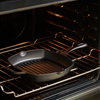
Place the cookware in the oven or season it on the stovetop, following the care recommendations for your specific product.
The heat allows the oil to polymerize and bond with the cast iron, helping build and strengthen the seasoning.
Always ensure your kitchen is properly ventilated, as heated oil can produce smoke.
Why Is Less Oil Better?
One of the most common mistakes when seasoning cast iron is assuming that more oil means more protection.
In reality, a layer that is too thick can leave behind:
- Sticky areas
- Uneven seasoning
- Residue buildup
- A tacky texture
- A surface that may cause food to stick
In some cases, excess oil can also create a surface that looks like the seasoning is lifting or coming off.
To build a strong seasoning, thin and even layers work better than thick ones.
Think of seasoning as something you build gradually, layer by layer.
Your Victoria Cast Iron Already Has a Head Start
Your Victoria cast iron cookware comes pre-seasoned at the factory and ready to use.
You don't need to completely re-season a new piece before cooking with it. Instead, regular use and proper care will help strengthen the natural seasoning over time.
The more you cook with your Victoria, the more opportunities you have to build its seasoned surface.
Preheat your cookware properly, use enough cooking fat for the food you're preparing, clean it after use, dry it thoroughly, and apply a light coat of oil when needed.
Over time, the seasoning will continue to develop and your cookware will become increasingly suited to natural food release.
The Right Oil Helps You Care for Your Cast Iron
If you're wondering what oil to use to season cast iron, three easy options to keep in mind are flaxseed, canola, and sunflower oil.
But choosing the oil is only part of the process. Applying a very thin, even layer and heating it properly is just as important.
And remember: your Victoria cast iron already comes with a factory seasoning. You don't have to start over—you simply get to keep building it.
Cook with it. Care for it. Keep making it better with every meal.